NWEA MAP Scores by Grade: A Practical Guide
Consider an adaptive test suite used in 146 countries that follows learning patterns from K through high school graduation. This platform goes beyond measuring what students know – it charts how their understanding evolves over time using a consistent map test scores chart 2026 scale.
The RIT scale creates a reliable way to compare progress across disciplines and grades. In contrast to traditional grading, it pinpoints exactly where students excel and where they require assistance. Instructors use these insights to personalize lessons, while families get clearer insight about their student’s educational journey.
Adaptive algorithms enable this. Questions adapt rigor based on responses, delivering individualized assessments for each student. This method yields higher-fidelity data than standard exams, enabling schools identify learning gaps early.
Key Takeaways
- Specialized scale measures learning patterns over time
- Computer-adaptive questioning tailors question difficulty
- Enables cross-subject comparisons from primary to secondary school
- Helps create targeted support strategies
- Implemented globally across different educational systems
Why MAP Testing Is Important
Modern education systems increasingly rely on computer-adaptive measures to gauge student development. One powerful approach uses responsive questioning that adjusts with individual abilities, producing tailored evaluations for each child. This method moves beyond static exams with fine-grained assessments that locate current knowledge levels.
The assessment adjusts question difficulty on the fly based on responses. If a student gets an item right, the next item becomes slightly harder. An incorrect answer yields a simpler next item. This immediate adjustment sustains focus while collecting detailed data about skill levels.
Core subjects like mathematics and reading anchor the assessment, with optional science components. Sessions typically run less than an hour per subject, limiting fatigue. Normative data show schools how their classes compare relative to peers nationwide.
Turning Results into Action
Teachers are provided with granular reports summarizing class trends and individual needs. These findings inform changes in lesson plans and deliver targeted support. For example, a group finding fractions challenging might receive extra practice materials.
Caregivers gain clear progress snapshots showing strengths and growth areas. Many districts pair results with personalized learning resources from educational partners, enabling home–school collaboration opportunities. Regular assessments track improvement patterns across academic years, making visible long-term growth trajectories.
RIT Scoring Explained for NWEA MAP
Reliable student assessment depends on robust scoring methods that reflect true learning patterns. The RIT measure reshapes how schools measure development, providing stable tracking from early grades through high school.
Equal-Interval Benefits
Different from percentage-based systems, the RIT framework uses equal increments. A 5-point gain in the ~180 range means the same growth as in the upper band. This uniform spacing enables detection of authentic progress across multiple school years.
Growth Tracking Through Multiple Assessments
Fall, winter, and spring testing create clear growth timelines. Autumn testing sets the baseline, winter shows interim progress, and end-of-year data shows overall progress. Teachers use these checkpoints to refine teaching strategies.
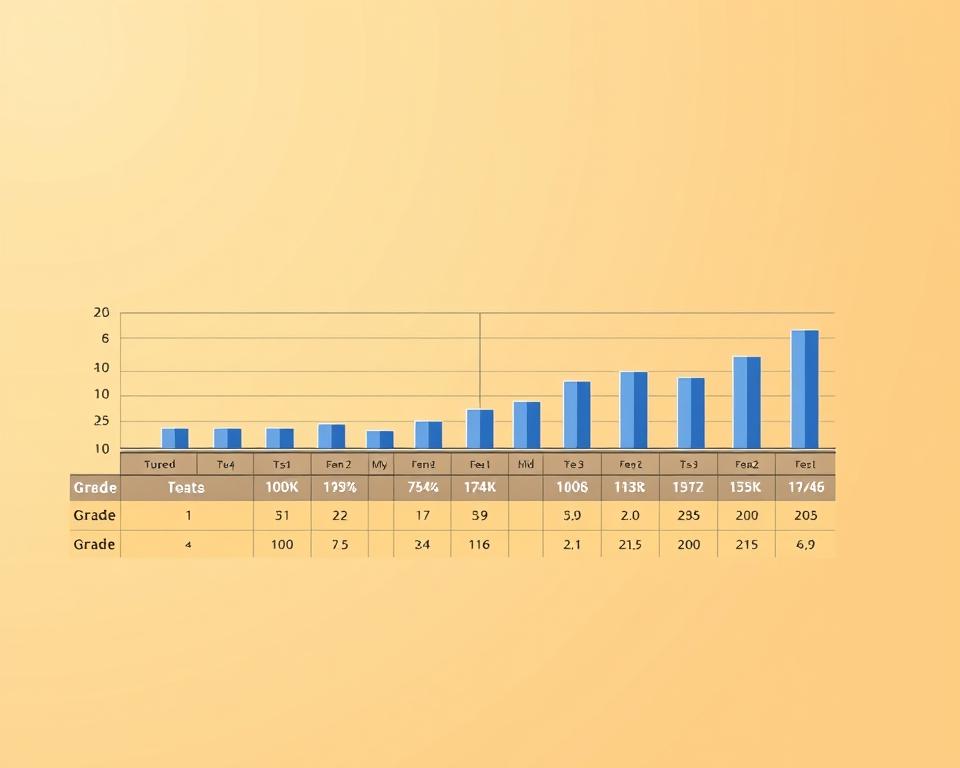
| Grade Level | Math Average | Reading Average | Language Average |
|---|---|---|---|
| Third Grade | around 195 | ~201 | ~198 |
| 5th Grade | 214 | around 212 | 209 |
| 7th Grade | around 228 | ~224 | 221 |
Cross-Subject Performance Analysis
The reporting flags strengths in specific subjects through color-coded reports. A student might excel in math while needing help in reading. These insights help create targeted plans.
Benchmark data contextualizes scores. Schools understand how cohorts compare compared with national groups, while families understand their child’s unique learning path.
How to Analyze Grade-Level MAP Data
Data-informed instruction turns raw numbers into instructional moves through careful analysis. Visual dashboards simplify complex information, helping educators spot patterns at a glance. Five distinct performance tiers compare individual results to national averages, providing intuitive visual benchmarks.
The quintile system uses colors to represent relative standing. Top blue band represents top performers exceeding 80% of peers, while the red band signals priority support. This at-a-glance coding guides resource allocation.
| Percentile Range | Color Code | Instructional Action |
|---|---|---|
| 01–20 | Red | Targeted support plans |
| 21st-40th | Orange | Skill-building activities |
| middle 20 | yellow | Monitored practice |
| 61st-80th | Green | Extension tasks |
| 81–100 | blue | Advanced challenges |
Using Scores to Drive Instruction
RIT score ranges enable temporary groups for small-group lessons. A class might have a few teams working on different nwea map test scores chart 2026 pdf concepts within the same period. This setup sustains focus with material appropriately leveled to their current abilities.
District administrators use system-level data to spot curriculum gaps. If multiple schools display low reading scores in specific bands, administrators might add targeted materials. Teachers combine these insights with classroom observations to refine teaching methods.
Grade-by-Grade Patterns
Learning growth unfolds in clear stages, each requiring specific evaluation approaches. Understanding grade-level expectations guides targeted supports while making clear to families how skills accumulate. The following analysis outlines how measurement tools capture growth through concrete data points.
Primary Years: K–2
Young learners exhibit rapid skill acquisition through early skills. Median mathematics results climb from around 140 in the first year to around 175 by second grade. Reading scores follow similar patterns, rising from ~137 to about 172 across these early years.
Key focus areas include letter–sound relationships and basic arithmetic. Spring assessments often reveal dramatic improvements as children solidify decoding. These measurements let teachers notice students who need phonics reinforcement or basic counting practice.
Grades 3–4: Strengthening Skills
Intermediate grades represent a move from learning basic literacy toward reading to learn. Mathematics medians hit 200 by fourth grade, indicating new math map scores by grade level abilities in times tables and fraction concepts. Writing and language scores highlight advancing grammar and writing skills.
Teachers use this data to tackle common challenges like word-problem reasoning. Class reports might reveal strong computation groups but showing needs in measurement conversion. Focused supports address these needs before the upper grades.
Advanced Application: 5th through 8th Grade
Upper grades demand more sophisticated thinking across subjects. Median math scores rise consistently from around 209 to 225, signaling algebra readiness. Reading assessments now measure inference-making and evidence citation.
Growth patterns slow slightly as material becomes more abstract. A +6 annual gain in seventh grade math demonstrates mastery of proportional reasoning. These insights support alignment of curriculum with long-term readiness goals.
Using MAP Results Effectively
MAP findings are most useful when converted into plans. By partnering, teachers and families can convert assessment findings into practical supports that meet each learner’s needs.
Spotting What to Boost and Improve
Detailed reports highlight skill areas where learners excel or struggle. Teachers might see a student with geometry strengths but requires fraction reinforcement. Families can spot patterns like consistent vocabulary growth alongside lagging fluency.
The color ranges make priorities clear. A top band in math reasoning signals advanced readiness, while orange highlights in grammar call for focused work. Regular follow-ups monitor progress arcs across subjects.
Practical Ways to Act on Data
Classroom flexibility is key. Educators might set up rotating groups for decoding practice or pre-algebra work. At home, parents could try suggested apps to focus on targeted skills through short daily sessions.
Schools often align outcomes with recommended resources. These might include interactive games for spatial reasoning or leveled texts. Teacher–family planning ensures each learner receives support matching their unique growth path.